


Session 1

Session 2

Future Doctors

Exploring the Human Body and Health

Future Doctors is designed for students interested in human biology and careers in medicine, nursing, physical therapy, science, or related fields. Students explore three major branches of biology through hands-on activities: anatomy, the study of how the body is put together; physiology, the study of how its parts work and respond; and genetics, the study of how heredity affects biology.

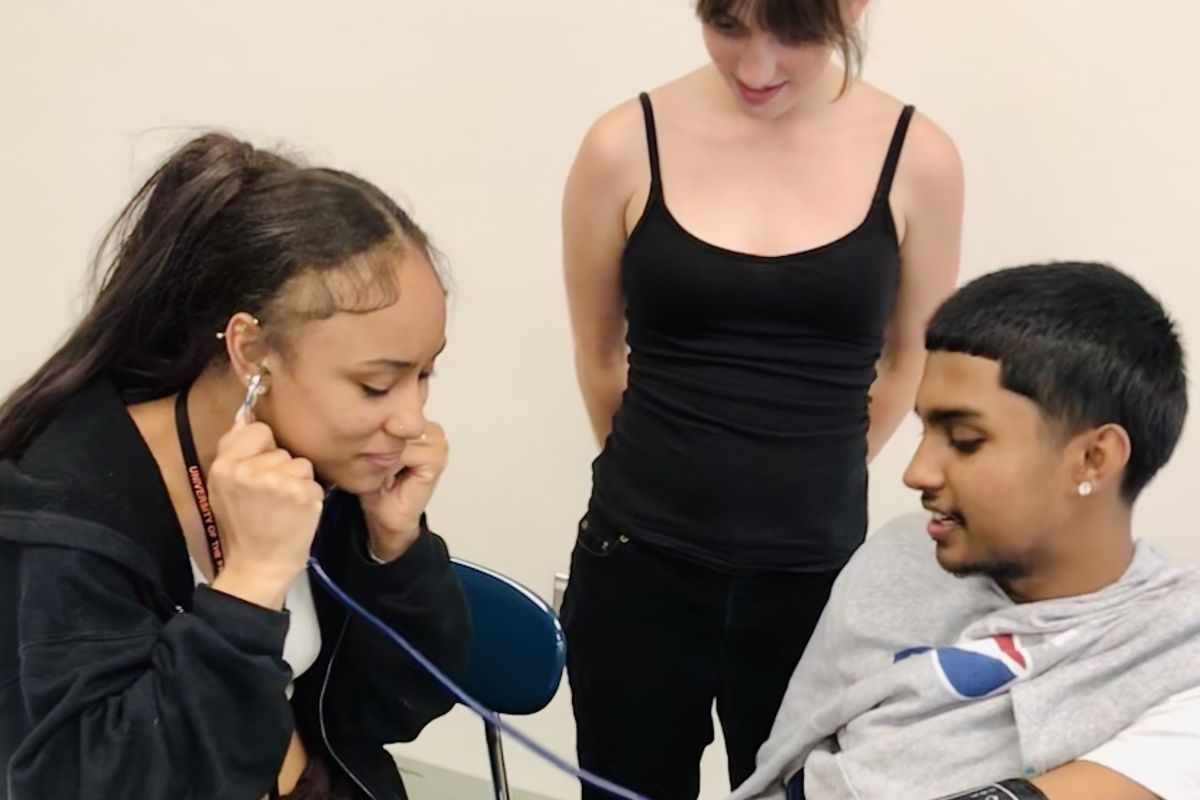
With at least two distinct lab activities each day, students learn through experiments, dissections, data analysis, and other hands-on experiences. The program welcomes students with a wide range of backgrounds, from those new to biology to those who have completed AP Biology, with multiple levels of participation and alternative non-dissection activities available when needed.
Curriculum

Students develop confidence in performing dissections, conducting genetic and physiological tests, interpreting complex data, and presenting scientific findings. Hands-on activities connect anatomy, physiology, and genetics while helping students understand how scientists and health professionals investigate the human body.

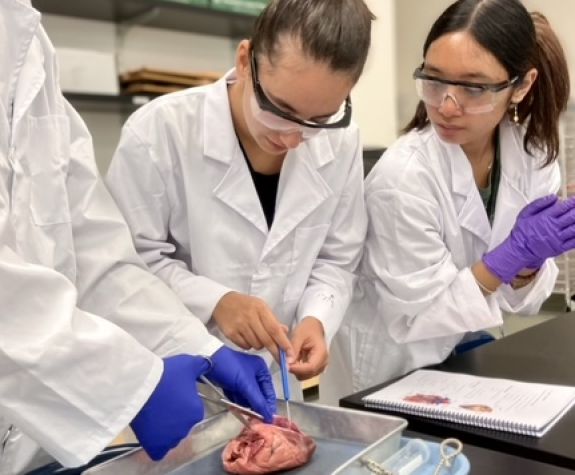
Students conduct physiological experiments such as measuring changes in brain activity under different conditions, explore anatomy through dissections of specimens such as a fetal pig, sheep heart, and sheep brain, and test their knowledge through interactive activities and friendly competitions. Activities respond in part to student interests, so individual labs and topics may be adjusted during the program.

The program is designed for students with a wide range of previous science experience. Many activities include multiple levels of participation and opportunities to explore topics in greater depth, allowing students to challenge themselves while building laboratory and scientific reasoning skills.

Dissecting a heart
Planned Topics

Planned topics include:

  • Human anatomy, physiology, and genetics
  • Bones, growth, fractures, and osteoporosis
  • Joints and tendons, with a focus on knee anatomy and injury
  • Blood pressure and cardiovascular physiology
  • The cardiac cycle, electrocardiograms, heart attacks, and CPR
  • Heart anatomy through non-human dissection
  • Brain regions and electroencephalography
  • Brain anatomy through non-human dissection
  • Vision and hearing sensitivity, sensory processing, and illusions
  • Respiration, voice, and speech
  • Digestive-system anatomy and physiology
  • Genetic testing and heredity
  • Physiological health measurements and experimental design
  • Health disparities and analysis of health data
  • Scientific data interpretation and presentation
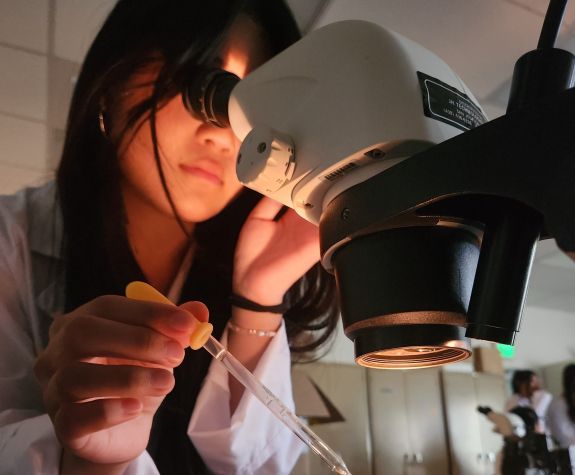
Student and microscope
Ajna Rivera
Session 1 Faculty Lead
Ajna Rivera

Associate Professor of Biological Sciences

B.Sc. in Biological Sciences, Stanford University 1999
Ph. D. in Molecular and Cell Biology UC Berkeley 2006
M.Sc. in Data Science, University of the Pacific 2024

Dr. Rivera is an expert in the field of Animal Comparative Biology. She examines how physical (anatomy and physiology) and genetic differences between species impact their interactions with the environment. She combines multiple types of evidence, including microscopy, behavior and CT scans, to build hypotheses about how bodies work and change over time.

Faculty Co-Lead
Emily Voelkner

Lab Coordinator, Department of Biological Sciences, College of the Pacific

M.S. in Biological Sciences, University of the Pacific, 2024

Emily has enjoyed teaching Human Physiology Laboratories first as a teaching assistant and then in her current role as lab coordinator. As a graduate student, she researched stress physiology in marine mammals.

Emily Voelkner