

Breadcrumb
Meet McGeorge’s latest LLM and JSD students
The 2026 incoming class at the University of the Pacific McGeorge School of Law welcomed 308 students, including 20 students enrolled in the Master of Laws (LLM) program and three students in the Doctor of Juridical Science (JSD) program.
The students in the LLM and JSD programs hail from 15 countries, including Afghanistan, Austria, Brazil, India, Iran, Italy, Kenya, Pakistan, Tunisia, Türkiye, Uganda, Ukraine, the United Kingdom, the United States and Uzbekistan.
Three students, one enrolled in the JD/LLM dual degree program and two in McGeorge’s JSD program, share their stories in this article.

Linnea Rustad '26 ‘28
Meet Linnea Rustad '26 ‘28: Fast Track JD/LLM program
Originally from Stillwater, Minnesota, Linnea Rustad ‘26 ‘28 graduated from the University of Wisconsin with a double major in geology and international business along with a legal studies certification.
After finishing her undergrad degree, Rustad took a gap year while participating in a research diving internship in Indonesia, where she discovered her passion for marine conservation and decided to pursue a career in ocean and coastal law.
“During this experience, I realized that no matter how much trash we collected underwater or how extensive our coral reef restoration efforts were, real change needed to occur at the surface through law and policy,” Rustad said.
McGeorge School of Law offers a Fast Track JD/LLM program in Water and Environmental Law, allowing students to earn both degrees on an accelerated timeline. Students can apply up to 12 credits of JD coursework toward their LLM degree, meaning the LLM degree may be completed in just one additional semester of full-time study or a year of part-time study.
“During my search for law schools, I specifically looked for programs that offered a course in ocean and coastal law, which quickly led me to McGeorge,” Rustad said. “Additionally, McGeorge's location played a significant role in my decision. Being close to the center of state policy development provides excellent opportunities for building connections within the Capitol.”
Rustad completed her JD degree in May and began classes for the LLM program in August. She explained that she’s looking forward to gaining firsthand experience with organizations through McGeorge’s LLM externship opportunities. Rustad will complete her externship at the California Coastkeeper Alliance, which is a nonprofit that promotes a statewide initiative for more swimmable, fishable, and drinkable water.
“I am genuinely enjoying the LLM program because I love the course content and the interactive format of our classes,” Rustad said. “This program allows me to explore the policy aspects of law and delve into my interests beyond traditional legal frameworks. Not only do I find these courses engaging, but I also believe they enhance my JD education by deepening my understanding of law and policy development.”
After graduation, Rustad hopes to work at an environmental nonprofit or government agency, ideally in a coastal or marine division focused on environmental and water law. Ultimately, she wants her daily work to contribute to the protection of ocean ecosystems by focusing on safeguarding coral reefs, promoting sustainable fisheries, and enhancing resilience to climate change.
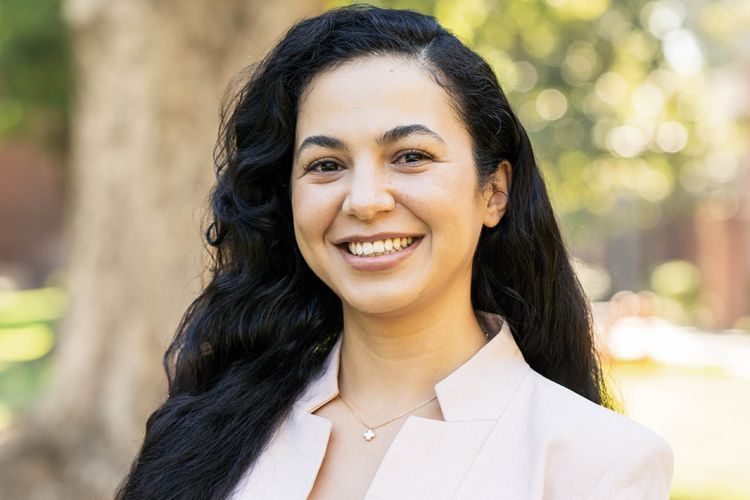
Reyhan Argin ‘26 ‘29
Meet Reyhan Argin '26 ‘29: JSD Program
Reyhan Argin ‘26 ‘29 grew up in Istanbul, Turkey, where she practiced as an attorney for two years before deciding to expand her legal knowledge and specialize in U.S. law. Argin and her husband, Ahmet Dabagh ‘26, one of McGeorge’s student commencement speakers at the 2026 commencement ceremony, finished their LLM degrees in May. Now, Argin began classes for the JSD program in August.
Argin is specializing her JSD studies in intellectual property and patent law in terms of Artificial Intelligence (AI) usage. Primarily, Argin is focusing on patent law within intellectual property when AI is involved in the creation of an idea by comparing AI statutes with traditional laws in different countries.
“It’s really problematic these days because a lot of people are asking a lot of questions to AI in Europe or anywhere you can imagine. And with just one click of a button, AI is creating lots of things,” Argin said.
Argin mentions how thankful she is to her professors for helping her through the research process, including McGeorge Professor Mike Mireles ‘98, Director of the Intellectual Property Certificate of Concentration. Argin explains that Professor Mireles is always up to helping her when she has questions and offers feedback when needed.
“I specifically chose the U.S. Law and Policy Program at McGeorge because I was able to better understand the American legal system and develop more of a comparative perspective,” Argin said. “And during my master’s program, I really liked the academic environment at McGeorge. Especially the close relationship between professors and students.”
The closeness and connection to the McGeorge community made the decision easy when Argin had to pick a university to continue her education.
“This is an opportunity for me to deepen my understanding and do more independent research after my master’s degree,” Argin said. “So, when I decided to continue my academic journey, staying at McGeorge just felt like a natural choice for me.”
After completing her JSD, Argin is working towards becoming an international attorney and counsel in comparative law.
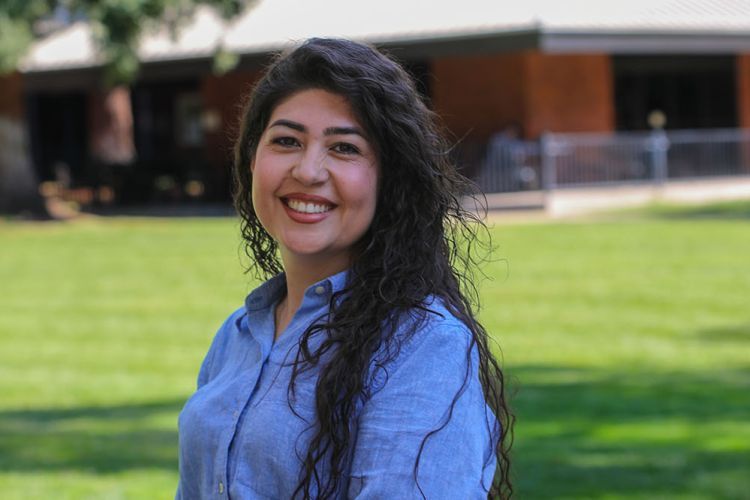
Sweeta Azimi ‘26 ‘28
Meet Sweeta Azimi ‘26 ‘28: JSD Program
Sweeta Azimi ‘26 ‘28 is originally from the northern province of Afghanistan called Badakhshan, home of the Pamir Mountains. From the time she was young, Azimi remembered knowing that she wanted to work in the legal field, and slowly she began to lean more into advocacy and would speak out when she saw injustices.
While attending Kabul University, Azimi was also enrolled in a private school, earning two bachelor’s degrees simultaneously: one in business administration and one in law. In 2018, Azimi graduated with her master’s degree in public relations.
In Afghanistan, she worked in the Administrative Office of the President as a law expert in corrections and was a representative of Afghanistan at the United Nations. In her position, Azimi began working with individuals from the U.S. Department of Justice Drug Enforcement Administration.
“In 2021, after the collapse, the Taliban took over the country because of my ties and my association with the U.S. government, I ended up being evacuated, and I came here,” Azimi said. “At the beginning, it was hard because of the lack of awareness. It caused me pain that everybody told me that all the education that I had back home was just gone.”
After conducting her own research, Azimi found out that a lawyer from a foreign country can take the U.S. bar exam, attend law school, and have all her previous education recognized.
After completing her application to McGeorge, Azimi was quickly put in touch with the administration. About two months later, she received her acceptance letter. She recalls it being the best day of her life.
“How lucky I am to be centered in an environment that is very nice, kind, sweet, and supportive environment. I was lucky enough to have been connected with Dean Clemence Kucera and Adriana Aguena, and I had a lot of support,” Azimi said.
Azimi completed her LLM degree at McGeorge in 2026 and is now enrolled in the JSD program; her concentration is in international investment arbitration and dispute settlement. Her topic of research is a comparative study among Central Asian countries, focusing on how to form a good arbitration ecosystem for Afghanistan.
Back in 2017, when Azimi was working at the Administrative Office of the President, government leaders of Afghanistan tried to build a policy that would help foreign investors have access to good local legal remedies to encourage more investment in the country.
“Now, this comparative study will not only help the Central Asian country to adopt some certain policies, encourage and make investors confident, but it will also help specifically Afghanistan and other countries in similar situations to build and work on the arbitration system so they can take advantage of international investment,” Azimi said.
Throughout her time in the JSD program, Azimi hopes to continually learn from her professors and continue to absorb information on international law, traditional arbitrations, and local remedies that can help drive and shape her research.